

On Black Trauma
“Suppose the only Negro who survived some centuries hence was the Negro painted by white Americans ... What would people in a hundred years say of Black Americans?”

1926: 100 years ago, W. E. B. Du Bois, deep in the rush of the Harlem Renaissance, told the NAACP that “all (Black) art must be propaganda to help improve the condition of the race.” While Du Bois certainly wasn’t the first intellectual to feel this way, it makes me wonder who he feels the central audience of Black art should be. If all Black art is done to improve our conditions then why write or paint or sculpt or sing if it doesn’t extol our virtue to the White masses and guilt them into surrendering the lion’s share of our stolen humanity as if it were some mere missing jigsaw piece? There is a notion today that our Black American artists that’ve solidified time-surviving legacies created within a Black bubble, only for each other. But as is the nature of capitalism, White approval is integral to the material success of most Black creators- even today. For example, any Black person in 1926 who wanted to write for a living and not just as a hobby needed a White readership or a White patron. And if this be the case, why not cater to them, what’s almost guaranteed to be your largest contingent? Amongst a million good reasons, I’d say because American history has shown that the question of Black humanity demands blood and sacrifice, broadcast and visible. Invisibility is tantamount to silence which may as well be White peace and everyone knows that ain’t no better than death.
Black trauma refers to art across different mediums that reflect racially-focused trauma against Black people for White enjoyment or education. Coming out of the Harlem Renaissance into the Civil Rights era and then the height of the Black Power movement and its extension, the blaxploitation film genre; Black art emphasized the struggles of romantic heroes against a racist society. The heroes were often “race men,” used to symbolize not just a singular plight but the troubles of an entire race. Think of Richard Wright’s Native Son (1940), which chronicles the story of Bigger Thomas and the mounting futility of his intentions against action in a White world that had already pronounced him guilty and dead at birth. Or Amiri Baraka’s play The Dutchman (1964), which features a Black man and a white woman having a racially charged conversation leading to his death. Or Gayl Jones’s Corregidora, which follows a jazz singer and her many abuses while coming to terms she comes from a long line of women produced by incestuous rape. Or Christopher St. John’s 1972 film, Top Of The Heap which shows a Black cop’s descent into madness after he gets passed over for yet another promotion and has to reconcile the fact he’ll always be just another nigga no matter his virtues. Most of the stories spoke to a crying out to be recognized by Whites, as evidenced by the opening sentences of Ralph Ellison’s landmark novel Invisible Man (1952):
“I am an Invisible Man. No, I am not a spook like those who haunted Edgar Allan Poe; nor am I one of your Hollywood-movie ectoplasms. I am a man of substance, of flesh and bone, fiber and liquids- and I might even be said to possess a mind. I am invisible, understand, simply because people refuse to see me.”
While this is a beautiful selection of prose, Toni Morrison’s famous response to Ellison’s novel, “invisible to whom?” rings in my mind. The protagonist, A Black man, is only invisible because he’s seeking white gaze. She juxtaposes this to her own books, which some also regard as Black trauma, where the Black characters and their interiority are often central rather than oppression from outside forces. Over the years there has been a premium placed on Black suffering, pain, and the fidelity in which we can express it for exterior parties. Our current climate seems to be posing a moral challenge to its authenticity and its necessity. Niggas say they’re tired of Black trauma. They want something else, they want whimsy. I think both Black trauma and Black joy have their place when done correctly.
To the credit of everyone who’s complained about Black trauma media, I will admit there is a lot of it, at least in relation to other Black art given the mainstream stage. If They See Us, Rosewood, Queen & Slim, Menace II Society, 12 Years A Slave, Fruitvale Station, Roots, Moonlight, The Hate U Give, Antwone Fisher, Amistad, and on and on and on. Black trauma art usually proliferates depending on what’s going on in the world or whatever projects that Whites had currently anointed as worthy with Oscars or National Book Awards. It was in 2016 when I was first introduced to the phrase, “Black trauma,” at least in relation to a form of media. I recall a lot of internet criticism for Nate Parker’s slave film about Nat Turner’s uprising titled Birth Of A Nation. This was a period of heightened social justice awareness, you’d think a movie about a preacher leading a slave rebellion would be par for the course but instead there were myriad complaints from all directions about a perceived over-production of slave movies (didn’t help that Nate Parker’s sexual assault allegations came to light during the scrutiny of the press run). George Floyd’s death and the subsequent protests made activism profitable again after the BLM’s initial momentum fell short. Suddenly Dababy was dropping protest trap music and brands were apologizing for their racist practices and initiatives were being announced all around for furthering Black advancement. White people appeared to be ready to sit there and take their talking to. But it was happening too quickly and felt fake. Since then, criticisms have only grown. Whether it be HBO’s Lovecraft Country using racial strife as a launch point for sci-fi horror or 2022’s Till film about Emmett Till’s mother Mamie Till-Bradley (I remember thousands of people criticizing the movie for even being announced, immediately assuming it’d be distasteful). There is a reason for this distrust. If the marketplace is the sole measure of art then it will always be dominated by white interests.
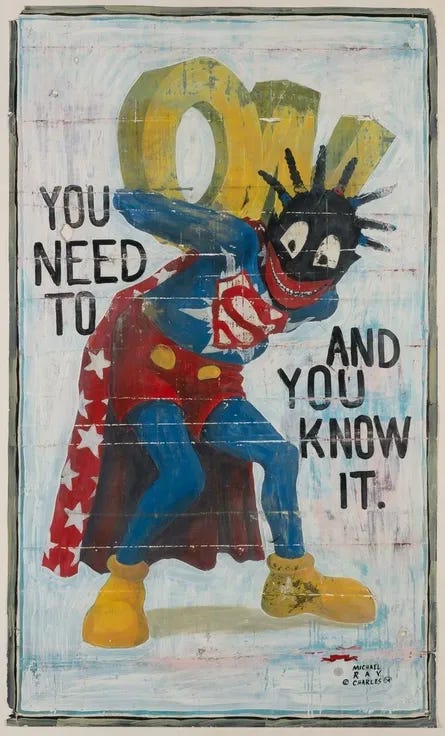
As a result of White domination, many Black artists have developed cynicism or juxtaposition into their expressions, the need to incorporate irony. Sincerity is frowned upon. Examples include Jean-Michel Basquiat, Kara Walker, Betye Saar, Kehinde Wiley, or Michael Ray Charles. Glenn Ligon and Thelma Golden have called them post-Black:
“artists interested in ‘redefining complex notions of blackness’ and getting beyond earlier paradigms of critical analysis that emphasized an artwork’s value based on its ability to serve as a propaganda tool.”
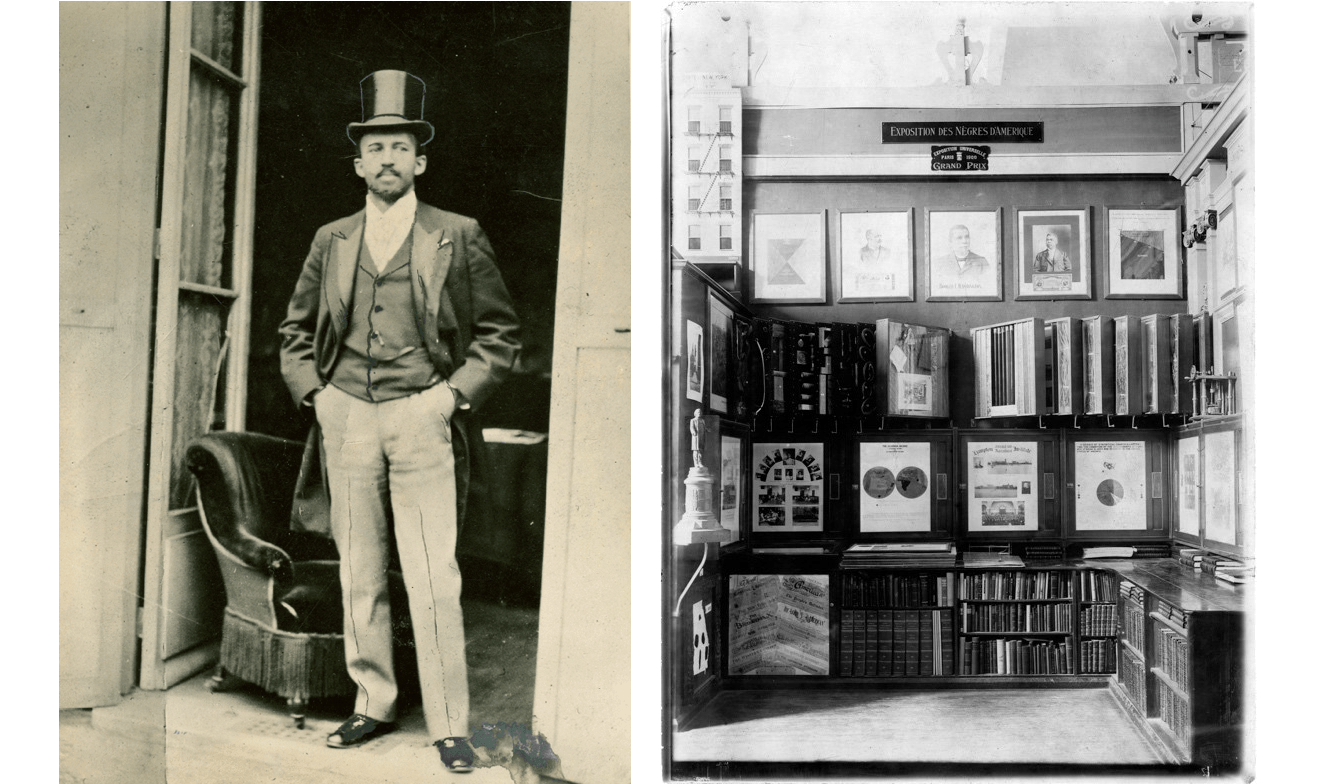
I look to Du Bois and the past again, his photographs for the 1900 Paris Exposition. He used photographs of extreme white perceptions of “negro criminality” to challenge the then popular notion that freedom had turned the negro’s criminal element loose and that slavery was a required temper for our base instincts. This notion didn’t only paint Black subjugation as normal, but as necessary. Du Bois fought this idea with images of the Black bourgeois dressed to kill in contemporary raiment but with framing of mugshots or I should say, niggas dressed up like white people. It calls to mind Henry Louis Gates Jr.’s idea of “signifyin’” or a manipulation of signs from The Signifying Monkey:
“the originality of so much of the black tradition emphasizes refiguration, or repetition and difference, or troping, underscoring the foregrounding of the chain of signifiers, rather than the mimetic representation of a novel content. Although signifyin’ can function ironically, there is nothing structurally that requires it to operate in that manner.”
The issue with this and Black trauma used ironically or otherwise is that Blackness produced through the eyes of white others is a reproduction of whiteness. It says more about the audience than it does those supposedly being represented. Black trauma is whiteness reproduced with a new skin, believing it should capture the moral worth of Black life or the moral lack of bigotry.
But we should be above asking to be seen, at least by now. Fuck whoever doesn’t see it.
So why am I defending Black trauma’s right to exist? In short, I believe all trauma and the expression of it is central to artistic narratives that have been around for millennia. The idea that Black trauma dominates too much of the cultural consciousness comes from a scarcity mindset. By the numbers, we don’t have the means of production, we can’t control what we get or how much. An insistence of only portraying Black people with whimsy or joy isn’t only ahistorical and unrealistic but dehumanizing altogether. Blackness contains infinite multitudes and the onus of expanding the stories we’re allowed to tell shouldn’t be on shrinking ones that don’t make us feel so good. As a society, we’ve gotten progressively worse at engaging with stories that elicit odd sensations. Rather than interrogating the cause, we shelve it as problematic and validate discomfort as the premier discerning tool. I believe Toni Morrison’s Sula (a book White critics complained had tried to appeal to Black audiences too much) has a passage that fully explains the necessity of negative forces as well:
“[A] full recognition of the legitimacy of forces other than good ones. They did not believe doctors could heal for them, none ever had done so. They did not believe death was accidental- life might be, but death was deliberate. They did not believe Nature was ever askew- only inconvenient. Plague and drought were as “natural” as springtime. If milk could curdle, God knows robins could fall. The purpose of evil was to survive it.”
But what’s the point of surviving evil if you can’t talk about it? If you need to shut up because we’ve heard too much about it? In Studies On Hysteria Sigmund Freud and Josef Breuer discuss the case of Anna O, a female hysteric suffering from trauma. The case study inherently reveals narrative as an efficient therapeutic. They call it the “talking cure.” Essentially, engaging in testimony improved her internal conditions and helped her deal with trauma. I believe Black trauma communicated through creativity that doesn’t center whiteness functions as a sort of talking cure. Freud’s psychoanalytic model has a counterpart in Aristotelian tragedy, particularly in the notion of katharsis. Aristotle’s katharsis also serves a healing function by discharging emotional excess, especially the feelings of pity and fear in the audience viewing the tragedy. Debilitating emotions made malleable by the simple act of sharing it. Do Black people not deserve this as well? And we’ve been doing it for centuries too. Frederick Douglass said:
“Slaves sing most when they are most unhappy. The songs of the slave represent the sorrows of the heart; and he is relieved by them, only as an aching heart is relieved by its tears… The singing of a man cast away upon a desolate island might be as appropriately considered as evidence of contentment and happiness, as the singing of a slave; the songs of one and of the other are prompted by the same emotion.”
Black people deserve to express the full scope of the human experience, no matter how much discomfort it causes.
I figured I’d be remiss if I didn’t mention the inspiration for this essay. I use substack as a way of working through thoughts and a few weeks back I saw a tiktok from a black gay man (the target audience on paper) talking about how he’s reading and not enjoying James Baldwin’s (semi-autofictional) Go Tell It On The Mountain because he doesn’t want to read Black trauma, he wants to read Black whimsy. The reduction of one of the premier writers of the 20th century to being “trauma porn” is belittling beyond description. It irritated me so much I had to turn my phone off and go touch grass. But the comments in full agreement with him were the most jarring part for me, one user said “Black struggle doesn’t make me proud to be Black.”
I said nothing.
But I wanted to say, who said their struggle is supposed to inform your pride? You, who’ve had it easy by comparison and get to reap the benefits of their turmoil behind. It has often been said that Blackness is not a monolith. A lot of Black people speaking from a privileged position want all depictions to appeal to their narrow experience. Are Jewish people on the internet en masse saying they’re so tired of holocaust movies? “No more Schindler’s List or Sophie’s Choice, we need more Judd Apatow movies.” Honestly, I don’t know. But I don’t think so.
I’ll admit though, I find immense beauty in struggle. And my Black Pride is either innate or so deeply ingrained I can no longer tell the difference, it doesn’t need to be catalyzed. But when I read the aforementioned comment, I did think of the closing of James Baldwin’s 1962 The New Yorker essay, “Letter From A Region Of My Mind.” He writes about the differences between violent and nonviolent rhetoric and what might be lost of Black beauty found in the margins when we’ve finally enacted our grand revenge and supplanted whiteness as the dominant repression:
“When I was very young, and was dealing with my buddies in those wine- and urine-stained hallways, something in me wondered, What will happen to all that beauty? For black people, though I am aware that some of us, black and white, do not know it yet, are very beautiful. And . . . I wondered, [thinking about how some black leaders spoke about getting revenge,] when that vengeance was achieved, What will happen to all that beauty then?”
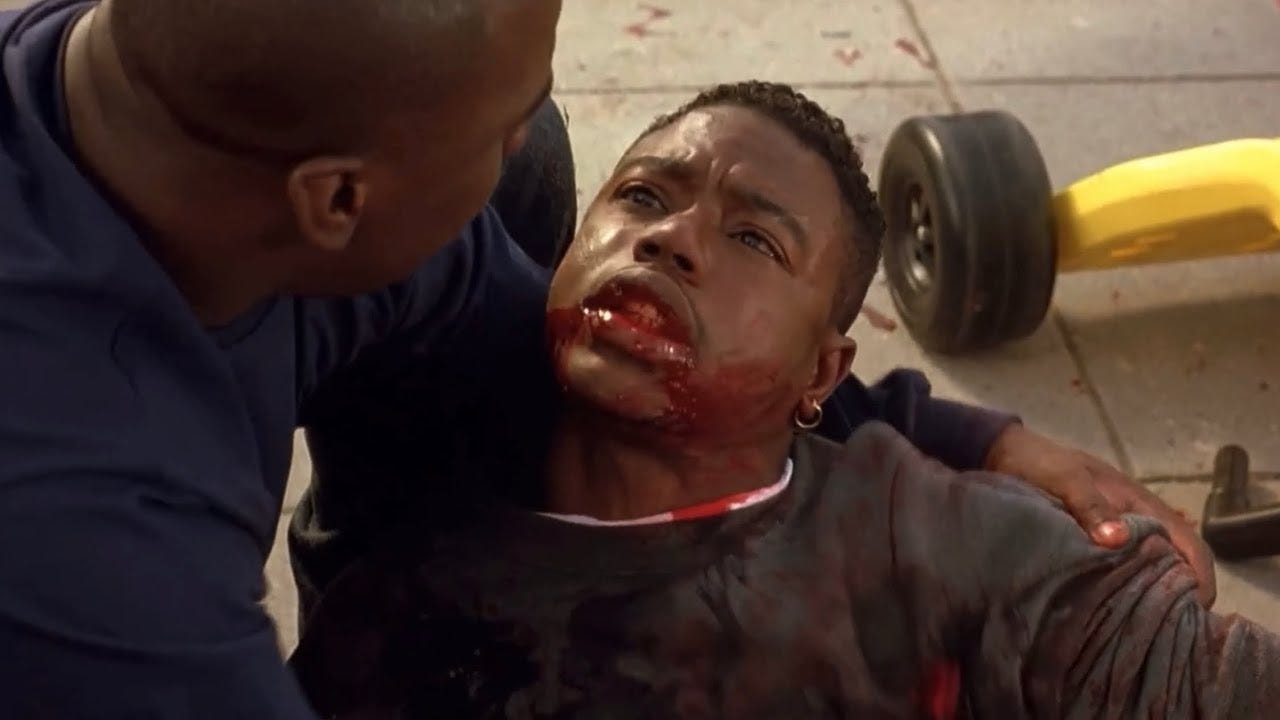
That same beauty Baldwin mourned is now being overlooked because it causes discomfort? And now I think about Menace II Society, one of more violent black trauma gangster flicks of the 90s. Twin brothers, Albert and Allen Hughes admittedly made the movie “to let white folk know what was really going on in the inner city.” George F. Will wrote in his 1993 Op-Ed for The Washington Post that Menace II Society could be a form of violence therapy, so overwhelming and bleak in its fatalism that it appeals to and can save the young Black man who “...need to see violence presented without a scintilla of romanticism.” But I don’t vibe with that either.
Simone Drake wrote an essay titled, “The Marketability of Black Joy: After ‘I Do’ in Black Romance Film.” She evoked the box office success of 2013’s The Best Man Holiday as proof that Black film needs drama reflecting the interior life of Black characters to be financially successful far more than it needed trauma to lend humanity to its Black characters. She scales the movie against Tyler Perry movies and Steve McQueen’s 12 Years A Slave- which she deliberately refused to see in theaters because “I decided if I was going to spend $15 to see a film, it would be one that made me feel good—that gave me joy.” The most arresting idea Simone Drake presented is that BMH is a “black-black” film, meaning:
“Films fall into the category of black-black films not simply because the cast is all or predominately black and the director is black; they fall into this category because the themes, language, and ways of being are not concerned about white accessibility and instead are invested in portraying a black interiority that is complex, intimate, and unapologetically black.”
I don’t dispute that it’s a very Black movie and that it feels very good to educated, urban, living, and thriving Black people on film seeking humanity without it being questioned. I too reject movies like Queen & Slim, which is more like a glitzy advert for the BLM movement than a true narrative. I reject the idea that symbolizing the legacy of oppression makes racist violence a worthwhile sacrifice. I also felt like I got the rug pulled out from under me after the trailer subverted our cop killer expectations. But I know Black people deserve to make movies about their fallen. Enterprising, sexy, and thriving is great but that’s not all of our reality. Not even most of us. There are too many untold Black stories to count, I can’t abide anyone being in the business of deciding which ones deserve to be broadcast to the world. Art has to be better than propaganda. It needs to be true.